
 EN
Photo Paper for Printing: Glossy vs Matte Explained
Choosing photo paper is not simply a choice between “shiny” and “not shiny.” For a print buyer, the finish changes how color, contrast, reflections, handling marks, and viewing distance work together. When evaluating OEM photo paper, start with the image’s final use rather than a finish preference alone. A bright retail photo, a framed wedding portrait, a menu board, and a fine-art reproduction may all need different surface behavior.
As a digital-printing material advisor, I recommend treating the first sample run as a small decision test: view the same image under the intended lighting, handle it as customers will, and compare the result at the actual display distance. That process makes the glossy-versus-matte choice much clearer than judging an unprinted sheet.
What changes when the finish changes?
Both glossy and matte photo paper use an ink-receptive coating designed for photo-quality inkjet output, but their surface top layers manage reflected light differently. Glossy paper has a smooth, reflective surface. The sheen can make dark areas look deeper and colors appear more saturated, especially when the print is viewed in controlled light. Matte paper has a low-reflection surface that diffuses light. Its visual character is calmer, with less glare when a viewer moves around the print.
That is why neither finish is automatically “better.” The better finish is the one that helps the finished print communicate in its real environment. The coating, ink set, printer profile, base weight, and drying conditions still affect the result. Two products called glossy can look noticeably different, so an OEM photo paper specification should define the finish level and the print test conditions instead of relying on a label alone.
Glossy photo paper: where it performs well
Glossy photo paper is often selected when visual impact is the priority. The reflective surface can make high-contrast photos feel more immediate, and it commonly suits colorful travel images, product beauty shots, event photos, and small consumer prints that will be viewed up close. Search results for photo media frequently group glossy, high-gloss, and semi-gloss products together because buyers want choices along a reflection spectrum rather than a single surface type.
- Strengths: lively color impression, strong apparent contrast, and a polished presentation.
- Good uses: photo albums, promotional handouts, colorful image displays, and short-run retail prints.
- Watch for: reflections near windows or spotlights, fingerprints from frequent handling, and surface marks that become visible at certain angles.
Glossy can be an excellent choice for a close-viewing print, but the same reflection that boosts visual punch may hide detail under strong overhead lighting. For commercial work, check the print under warm and cool light rather than only under a proofing lamp. If the print will be framed behind glass, test that combination too; glass plus a glossy surface can create more reflections than either component alone.
Matte photo paper: where it performs well
Matte photo paper is chosen when readability and low glare are more important than shine. Its subdued surface can make it easier to view images from several angles, which is useful for framed displays, gallery-style work, text-and-photo layouts, portfolios, and images that will be handled often. A matte finish often gives portraits and illustrated work a softer, more tactile presentation.
- Strengths: reduced glare, a restrained surface appearance, and less visible handling marks in everyday viewing.
- Good uses: wall displays, art reproductions, photo books, presentation folders, and prints in bright spaces.
- Watch for: a less reflective “pop” in very saturated images and possible differences in black appearance depending on the printer and coating.
Matte does not mean dull. A well-matched ink and coating system can still produce rich color. The useful question is whether the image needs a mirror-like highlight or whether it needs to remain comfortable to view in an open, brightly lit room. When glare control matters, matte is often the safer first proof.
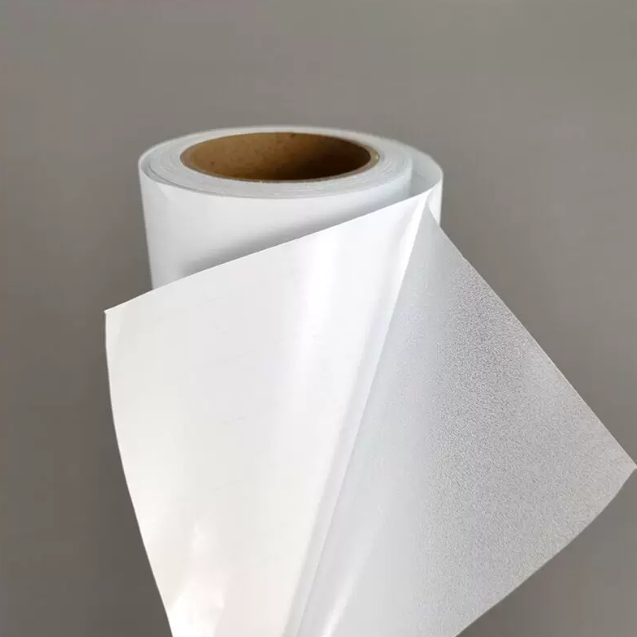
A practical glossy vs matte selection table
| Decision factor | Glossy | Matte |
|---|---|---|
| Color impression | Often feels more vivid and high contrast | Often feels softer and more restrained |
| Reflection | Higher; test under direct lighting | Lower; easier to view in bright areas |
| Handling appearance | Fingerprints may be more noticeable | Marks are often less distracting |
| Typical display fit | Close-viewing, high-impact photos | Framed, gallery, portfolio, and readable displays |
| Proofing priority | Highlights, glare, and surface scratches | Shadow detail, color depth, and texture |
How to specify OEM photo paper for a dependable result
For distributors, print-service providers, and private-label buyers, finish is only one line in the brief. A useful OEM photo paper request also states printer technology, ink type, sheet or roll dimensions, base weight range, coating side, intended use, packaging format, and the image tests that matter. If the product will be sold under a private label, specify the acceptable tolerance for curl, cut accuracy, surface defects, and packaging protection before approving volume production.
Ask for representative samples in both finishes. Print the same file with the target printer profile, include saturated colors, skin tones, fine type, a deep shadow, and a light neutral area, then record the settings. Let the prints dry according to the ink supplier’s guidance before judging them. This avoids confusing a drying issue or an incorrect media setting with a finish problem.
TREES focuses on precision-coated digital printing media and custom functional-film solutions for commercial printing applications. For a sourcing conversation, share your application and proofing method first. That gives the supplier a clearer basis for discussing coating options and sample evaluation rather than promising a one-size-fits-all finish.
Use semi-gloss when the decision is genuinely in between
If glossy appears too reflective and matte feels too quiet, a semi-gloss or lustre-style option may be worth testing. This middle category can retain some color richness while reducing the strongest reflections. It is not a substitute for a proof, however. Finish names are not fully standardized across suppliers, so a physical sample is the most reliable reference.
OEM photo paper approval checklist
For repeat purchasing, use the same brief every time. An OEM photo paper sample should be evaluated as a system, not as an isolated sheet. The following checkpoints help a buyer compare an OEM photo paper sample fairly across suppliers and production lots.
- Confirm the finish level named in the OEM photo paper specification.
- Print a shared test file on every OEM photo paper candidate.
- Record the printer, ink, profile, and media setting used for OEM photo paper proofing.
- Inspect white areas and skin tones on each OEM photo paper sheet.
- View glossy OEM photo paper under the actual display lighting.
- Check whether matte OEM photo paper retains the needed shadow separation.
- Handle the OEM photo paper after drying and check visible marks.
- Compare curl and flatness after the OEM photo paper leaves the printer.
- Check cutting and packing consistency for each OEM photo paper format.
- Keep an approved sample as the reference for future OEM photo paper deliveries.
Questions to ask before ordering
Can the supplier provide a finish target for the OEM photo paper? Is the coating one-sided or two-sided? Which ink technologies has the OEM photo paper been tested with? What sheet sizes, roll widths, and pack counts can the OEM photo paper program support? How will the OEM photo paper be protected against moisture, edge damage, and surface scuffing during shipment?
It is also useful to define the acceptance process in writing. A buyer can approve an OEM photo paper lot against agreed print samples, visual checks, and packaging checks. For a glossy OEM photo paper item, include a reflection check; for a matte OEM photo paper item, include a low-glare viewing check. This gives both sides a practical way to review an OEM photo paper result before scale-up.
Finally, separate the finish decision from the branding decision. Private-label artwork, barcode placement, carton configuration, and ship-ready packaging should be validated alongside the OEM photo paper media. A consistent OEM photo paper program is built from repeatable specifications and documented proofs, not from a finish name alone.
Final recommendation
Choose glossy when the job benefits from an energetic, reflective image surface and the viewing light is controlled. Choose matte when glare reduction, comfortable viewing, and a more understated look matter most. For a dependable OEM photo paper program, document the finish alongside printer, ink, coating, weight, packaging, and acceptance tests. The right choice is the one that performs consistently in the customer’s actual viewing and handling conditions.
 Hot News