
 EN
EN
Outdoor Advertising Vinyl: Features, Types, and Applications
When you are responsible for sourcing materials for thousands of square meters of outdoor signage annually, the choice of vinyl substrate is far from trivial. I spent years evaluating wholesale outdoor advertising vinyl for production runs, and early on I made the same mistake most buyers do: focusing almost entirely on price per roll. A few batches of inconsistent outdoor durability changed that. Banners fading ahead of schedule, mesh panels delaminating in wind — those experiences made it clear that selecting wholesale outdoor advertising vinyl requires a systematic approach, not just price comparison.
This guide covers what matters when evaluating wholesale outdoor advertising vinyl at scale: the material properties that determine field performance, the principal types available and how their specifications map to end-use requirements, and the application contexts that should drive your buying decision. Whether you stock a print shop, supply a sign-making network, or manage media procurement for an advertising group, understanding the substrate reduces waste, reprints, and client complaints.
Core Features of Outdoor Advertising Vinyl
Wholesale outdoor advertising vinyl is a broad product category, but materials that perform reliably in exterior environments share measurable properties that buyers should verify before committing to volume.
UV and Weather Resistance
Ultraviolet degradation is the primary cause of premature failure in outdoor print media. Vinyl substrates for exterior use incorporate UV stabilizers both in the PVC compound and in the coating layer. Well-formulated outdoor vinyl typically delivers a service life of two to three years in direct sun exposure — the standard billboard replacement cycle used by major outdoor media operators. Materials rated for shorter periods may work for single-event installations, but buyers supplying production printers must specify and verify UV resistance explicitly rather than accepting generic "outdoor-grade" descriptions.
Weight and Substrate Thickness
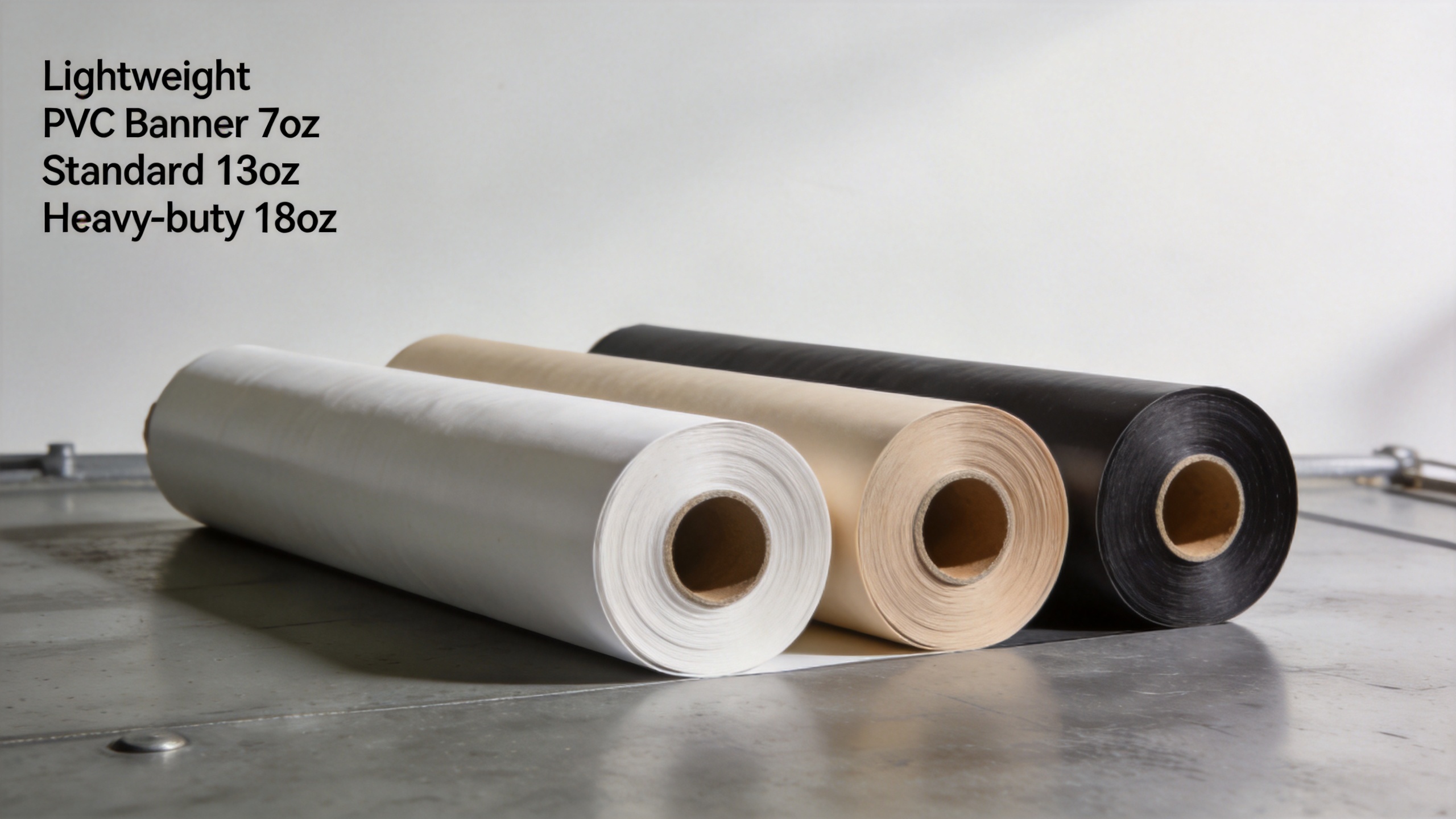
Material weight — expressed in ounces per square yard in North America and grams per square meter (GSM) in most international trade — is a reliable proxy for mechanical durability. Wholesale outdoor advertising vinyl typically falls in the 300–550 GSM range, with the appropriate weight depending on the application:
- Lightweight (300–380 GSM / 7–9 oz): For short-term event banners and large-format billboard panels where the installation structure carries the tension load. Billboard operators such as Lamar and Clear Channel specify 7 oz flex for their bulletin inventory.
- Standard (380–500 GSM / 10–13 oz): The most common specification for general outdoor advertising banners, trade fair backdrops, and building wraps. A 13 oz substrate handles moderate wind loads and typical outdoor exposure cycles.
- Heavy-duty (500–550 GSM / 18 oz): For high-traffic locations, long-term installations, or environments with significant mechanical stress. The added mass resists tearing at grommets and holds edge integrity under sustained tension.
Print Surface and Ink Compatibility
The coating layer on outdoor vinyl determines how well the material accepts and retains wide-format print inks. Solvent and eco-solvent inkjet inks are the dominant printing systems for outdoor advertising vinyl; some coated products also support latex and UV-curable inks. When evaluating wholesale outdoor advertising vinyl, confirm that the surface coating specifies ink types and provides adhesion without requiring overlamination for standard outdoor durability. If a product requires lamination to achieve advertised weather resistance, that cost and process complexity should factor into the true procurement price.
Dimensional Stability and Tensile Strength
Large-format prints stretched across billboard frames or suspended between poles are under continuous tension. Quality outdoor substrates typically embed a knitted or woven polyester scrim in the PVC compound; scrim weight and weave density determine tear resistance. A substrate may pass single-axis pull tests but fail prematurely when loaded across both directions in a real installation — this is why technical data sheets with specific N/5 cm values matter more than general durability claims.
Principal Types of Outdoor Advertising Vinyl
The market segments wholesale outdoor advertising vinyl into several product types, each optimized for a different display format. Misspecifying the type generates either unnecessary cost or field failures — both outcomes are expensive at wholesale volume.
Frontlit Flex Banner
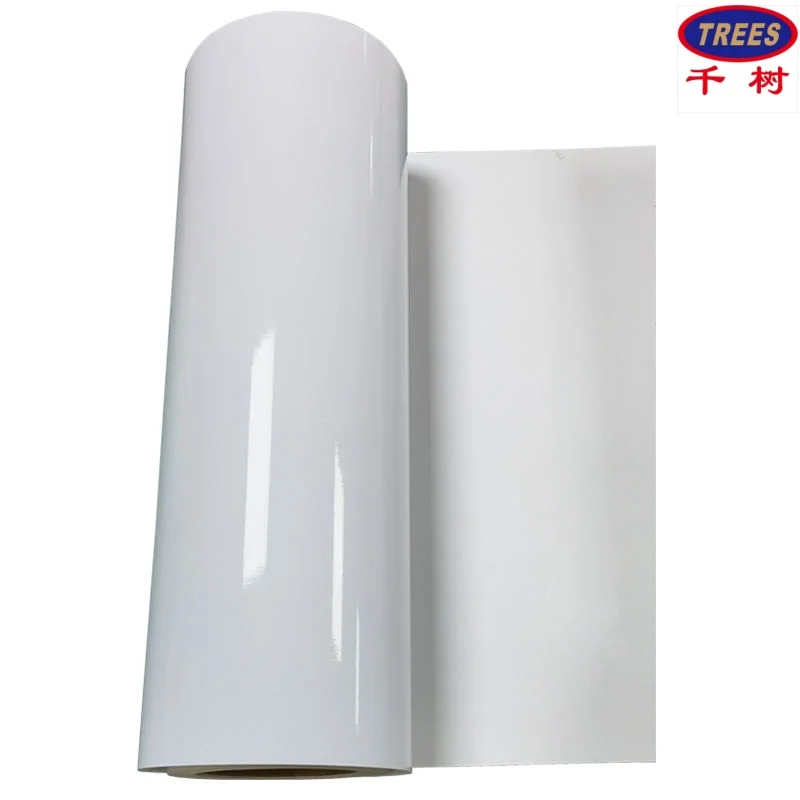
Frontlit flex banner is the foundational type in the wholesale outdoor advertising vinyl market. It is an opaque, coated PVC substrate for printed graphics viewed under ambient or directed front lighting. The surface is typically gloss or matte. Frontlit material in the 440–510 GSM range covers the majority of outdoor banner, billboard, and retail signage applications. When building inventory for general print shop supply, frontlit flex accounts for the highest volume and most consistent demand in wholesale outdoor advertising vinyl procurement.
Backlit Flex Banner
Backlit flex banner is engineered for illuminated display cabinets, light boxes, and backlit billboard structures. The key property is controlled light transmission — typically 20–40% transmittance — combined with color accuracy that compensates for color shift when a graphic is viewed with transmitted rather than reflected light. Buyers supplying print shops that handle illuminated displays need materials with documented transmittance specifications and recommended ICC color profiles.
Mesh Vinyl
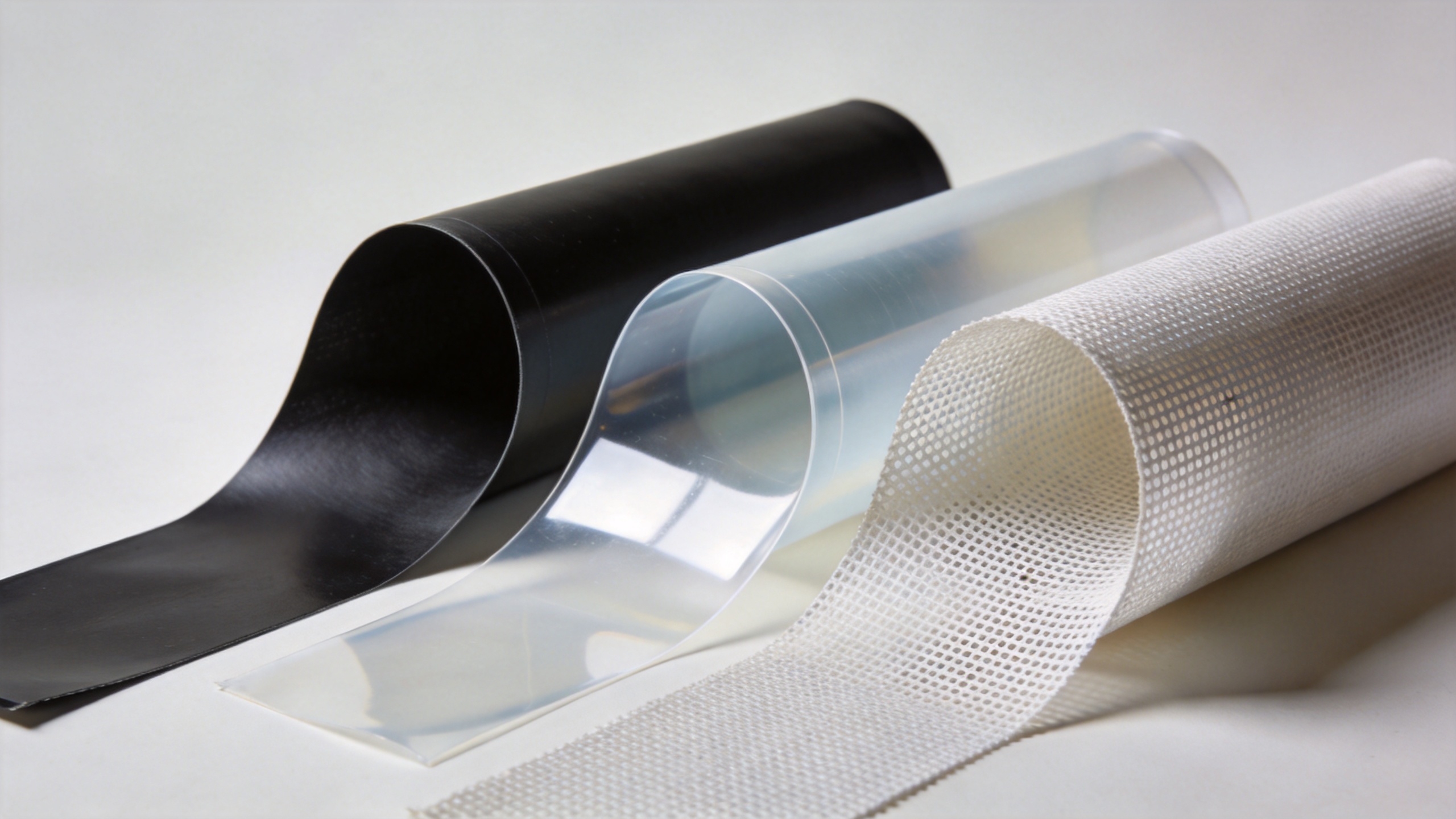
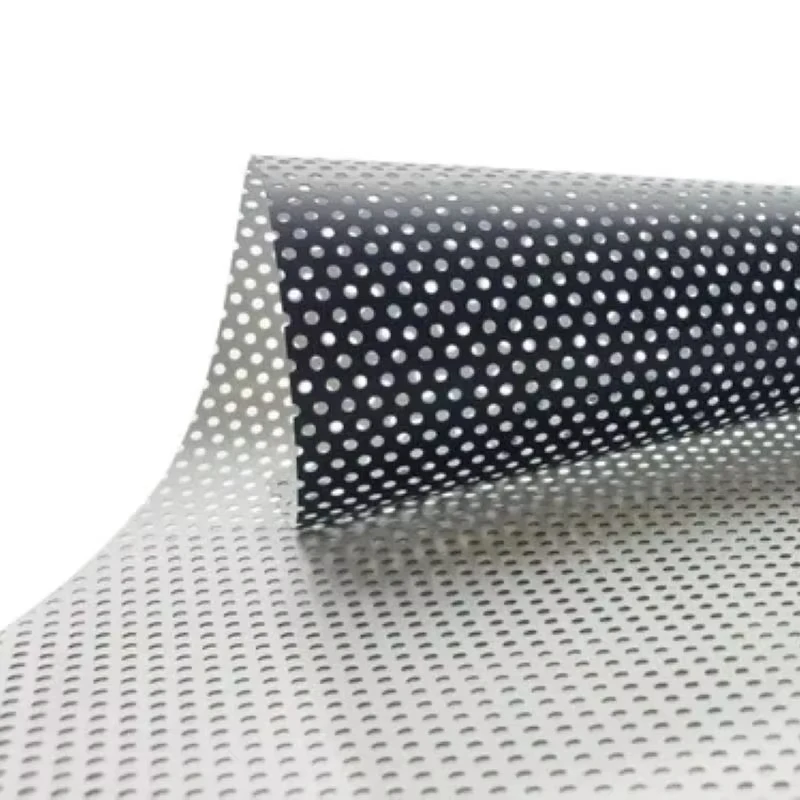
Mesh vinyl is a perforated or open-weave substrate used where wind load is a significant constraint — building wraps, construction hoardings, and large outdoor events are typical applications. The perforations allow air to pass through, reducing the sail effect that can damage both the print and the supporting structure. Mesh specifications vary in open area from around 30% to 65%; higher open area means lower wind resistance but also lower visual opacity. Stocking two or three mesh specifications covers the application range without excessive SKU proliferation.
Blockout Banner
Blockout vinyl incorporates an opaque mid-layer that prevents light from passing through. This makes it suitable for double-sided applications, where graphics on opposite faces must not bleed through to the reverse side. Blockout material also serves window applications requiring exterior opacity. The blockout layer adds weight and cost, so it is specified only where the application genuinely requires it.
Self-Adhesive Outdoor Vinyl
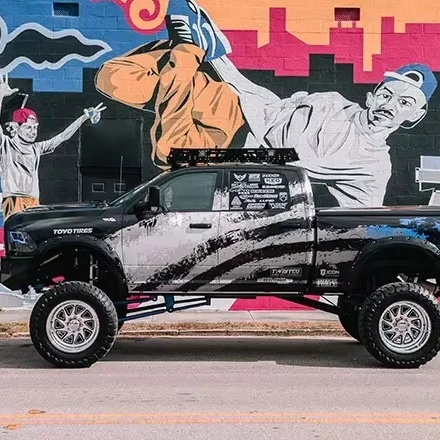
Self-adhesive outdoor vinyl is coated with a pressure-sensitive adhesive and used for vehicle wraps, window graphics, and flat surface applications. For wholesale outdoor advertising vinyl procurement, self-adhesive materials involve different performance criteria — adhesive tack, conformability to curved surfaces, removability — and are typically sourced separately from free-hanging banner media. Vehicle wrap applications specifically require cast film construction rather than the calendered construction standard in banner-grade wholesale outdoor advertising vinyl; cross-supplying banner vinyl into vehicle wrap applications generates field failures regardless of other specifications.
Application Matching
The practical value of understanding vinyl types is in matching substrate to end use. At wholesale scale, the same supply relationship may cover billboard production, event banners, and retail window campaigns simultaneously.
Large-Format Billboards and Building Wraps
Standard bulletin billboard production uses 7 oz or 13 oz frontlit flex, depending on the operator's specification and installation duration. Building wraps may use heavyweight frontlit for short-term campaigns or mesh for permanent installations with significant wind loads. Wholesale outdoor advertising vinyl buyers supplying billboard printers should maintain both weight grades in inventory and clarify application requirements before fulfilling orders.
Event Banners and Trade Show Displays
Short-term outdoor event banners can use lighter frontlit material in the 380–440 GSM range, offering a cost advantage when installation life is measured in days rather than months. Trade show applications moving between indoor and outdoor venues benefit from mid-weight frontlit that handles both environments without requiring different inventory lines.
Retail Signage
Retail signage frequently uses standard frontlit for exterior fascia banners and backlit for illuminated cabinet inserts. In retail, color accuracy and batch consistency take priority over raw durability, since retail signage changes more frequently than billboard media. Batch inconsistency in wholesale outdoor advertising vinyl can translate directly into visible color mismatches across a retail chain's locations — a problem with immediate commercial consequences.
Wholesale Sourcing Verification
Volume procurement carries risks that don't show up in single-unit test orders. Before committing to volume on any wholesale outdoor advertising vinyl product, verify the following from the supplier:
- Technical data sheets with specific tensile strength values (N/5 cm, warp and weft), elongation, and tear resistance.
- Ink compatibility documentation specifying validated printer systems and ink types, and whether overlamination is required.
- UV resistance rating with a defined test standard and duration.
- Batch-to-batch consistency controls — critical for buyers supplying multiple print facilities that need matched output across locations and time periods.
- Roll width and length tolerances, since deviations create waste and scheduling problems in high-volume production.
Sourcing wholesale outdoor advertising vinyl from manufacturers with documented quality management systems and transparent technical specifications reduces downstream risk significantly. The investment in reviewing supplier documentation pays back through fewer reprints, more predictable production, and better outcomes for the end clients whose campaigns depend on consistent material performance.

 Hot News