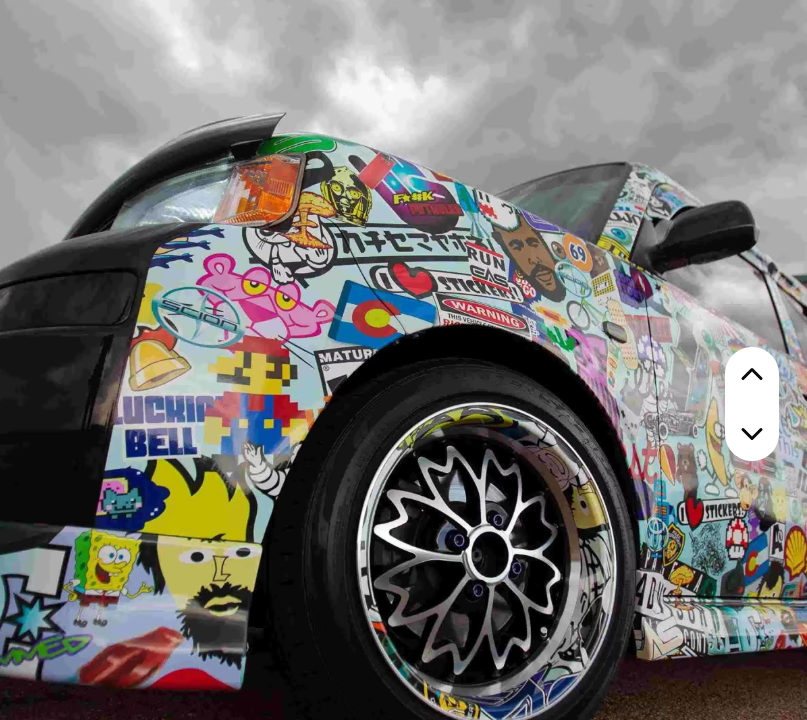
Digital advertising is essential for reach—but physical marketing collateral creates a distinct advantage by establishing a tangible connection with the audience. A well-designed self adhesive sticker combines high customization, low production cost, and exceptional longevity. Unlike fleeting social media posts or banner ads, a sticker integrates directly into the user’s daily environment—transforming a logo into a persistent brand asset that delivers value long after distribution.
Consumers in digital-first markets face thousands of transient ad impressions daily, resulting in banner blindness and low retention. Physical media cuts through this noise by engaging the sense of touch. When users voluntarily apply a self adhesive sticker to a personal item—like a laptop or water bottle—they form an ongoing, tactile relationship with the brand. Research from the Journal of Consumer Psychology shows tactile engagement with durable branded stickers boosts recall by up to 30%, and over 70% of consumers report stronger brand memory when logos appear on personal belongings. This makes stickers uniquely effective at embedding brand identity into long-term memory.
The strategic power of printed stickers lies in their unmatched cost-efficiency and persistent visibility. Digital ads stop delivering value the moment the budget pauses; a single sticker placed on a frequently used item—a phone case, company laptop, or trade show giveaway—can generate thousands of organic impressions over one to three years. That initial production cost becomes a long-term asset, offering continuous exposure to targeted audiences more efficiently than most paid digital channels.
Material selection directly determines performance and lifespan. For indoor use—such as retail displays or office branding—premium coated paper or eco-friendly synthetic paper offers crisp print quality and sustainability without needing UV or weather resistance. Outdoor applications demand greater resilience: exposure to sunlight requires UV-stable materials like premium vinyl (PVC) or PET to prevent fading, cracking, or delamination. These substrates also resist rain, humidity, and thermal cycling. Paired with UV-resistant acrylic adhesives, they deliver multi-year outdoor durability—validated through ASTM D4145 accelerated weathering tests. Matching material and adhesive to real-world conditions prevents premature failure and preserves brand visibility.
Adhesive chemistry defines functional performance. Permanent acrylic adhesives create strong, long-lasting bonds ideal for asset labeling or product identification where removal isn’t required. Removable adhesives allow clean, residue-free removal—critical for temporary promotions, rental equipment, or leased spaces. Waterproof formulations add protection against moisture ingress, making them essential for beverage labels, outdoor signage, or vehicle decals. Within each category, formulation matters: acrylics offer superior UV resistance and aging stability, while rubber-based adhesives deliver higher initial tack on low-energy surfaces. Re-positionable adhesives support precise placement without rework. Crucially, surface energy and application temperature must be considered—polyethylene or silicone-coated surfaces require specialty adhesives to ensure reliable bonding.
Choosing the right format directly impacts how effectively your custom self adhesive stickers serve promotional and distribution goals. Two critical manufacturing options—kiss-cut and die-cut—require strategic understanding.
Kiss-cutting partially severs the sticker layer while leaving the backing intact, creating easy-peel units with a thin border. It’s highly efficient for medium-to-large runs using standard sheet sizes, minimizing material waste and setup time. However, slight registration variances during printing or cutting can leave visible edges upon application—especially on curved or glossy surfaces. Die-cutting fully contours each sticker to its exact shape, eliminating backing borders entirely. This enables seamless integration onto complex surfaces—from contoured product packaging to storefront windows—and ensures consistent, professional adhesion. While die-cut tooling incurs higher upfront costs, it’s indispensable for limited editions, premium launches, or any campaign where visual fidelity and user experience are non-negotiable.
Distribution efficiency dictates optimal physical format:
Brands across industries leverage self adhesive stickers for measurable impact: e-commerce businesses seal mailer boxes with branded stickers, turning every delivery into a mobile advertisement. Cafés and restaurants use them for packaging seals, loyalty cards, and window decals. Cosmetics and food-and-beverage brands rely on custom sticker labels for compliance-driven tasks like allergen marking—and for aesthetic differentiation on shelf. Collectively, these uses drive strong returns: 76% of recipients recall the brand after receiving a sticker, outperforming traditional print ads (53%). At just $0.002 per impression—the lowest among mainstream marketing formats—stickers deliver proven ROI between 200% and 300%. Sixty-two percent of customers say branded stickers enhance the unboxing experience, increasing repeat purchase likelihood, while branded stickers appear in one out of every eight unboxing videos—generating authentic, unpaid reach.
What types of adhesives are best for self adhesive stickers?
Permanent adhesives are ideal for long-lasting use, removable adhesives work for temporary applications, and waterproof adhesives are perfect for moisture-prone environments.
What are the benefits of die-cut versus kiss-cut stickers?
Die-cut stickers offer precise shapes for a professional finish, while kiss-cut stickers are easy to peel and are more cost-efficient for large runs.
How do self adhesive stickers compare to digital advertising?
Self adhesive stickers provide longer-lasting impressions and tactile engagement compared to transient digital ads, making them cost-effective physical marketing tools.
What materials are best for outdoor use?
Materials like premium vinyl (PVC) or PET with UV-resistant acrylic adhesives are ideal for outdoor use, as they resist weathering, fading, and moisture.
How do I decide between rolls, sheets, or singles for my stickers?
Rolls are ideal for high-volume applications, sheets work well in retail settings, and singles are best for personalized, one-on-one distribution campaigns.
Copyright © Zhejiang Yueqianshu Digital Technology Co., Ltd. - Privacy policy
 EN
EN
 Hot News