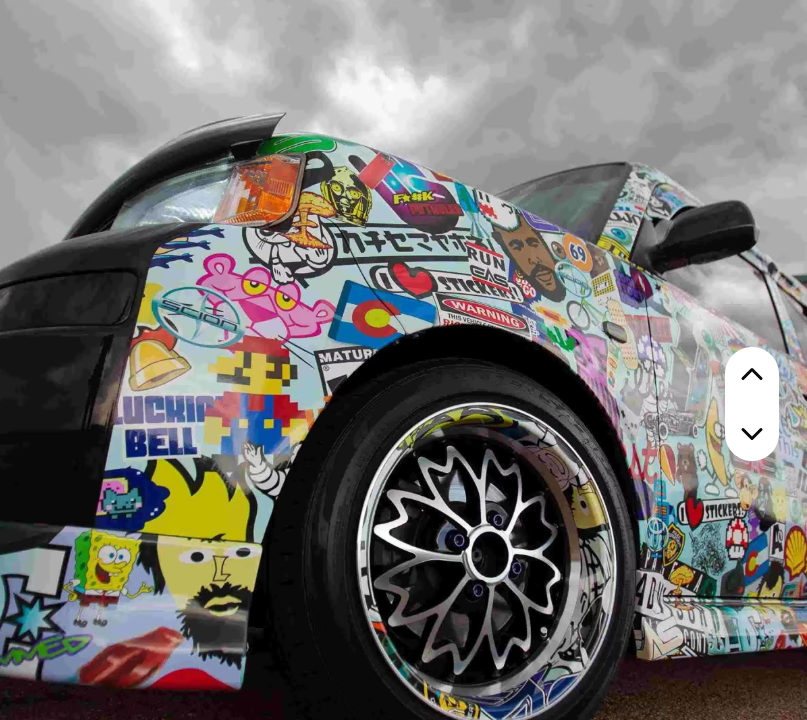
The choice between cast and calendered vinyl directly impacts longevity, conformability, and suitability for professional signage. Cast vinyl is formed by casting liquid PVC into thin, uniform sheets—a process that yields exceptional flexibility and dimensional stability. Its molecular structure allows it to drape smoothly over deep contours, making it the industry standard for vehicle wraps, corrugated metal panels, and architectural curves. High-quality cast films deliver 8–12 years of outdoor performance with minimal fading or cracking, justifying their premium cost for long-term, high-visibility applications.
Calendered vinyl, by contrast, is manufactured by extruding molten PVC through precision rollers—resulting in a thicker, less elastic film. While significantly more affordable (typically half the price of cast), its reduced conformability limits use to flat or gently curved surfaces such as rigid sign boards, storefront windows, and short-term promotional displays. Outdoor service life is generally 3–5 years, after which UV exposure and thermal cycling may cause edge lift or embrittlement. For any project demanding deep contouring or multi-year exterior durability, cast self adhesive vinyl remains the authoritative choice.
PVC-based self adhesive vinyls differ critically in plasticizer chemistry—determining their long-term stability and environmental resilience. Monomeric PVC relies on low-molecular-weight plasticizers that gradually migrate to the surface over time. This leads to hardening, shrinkage, and loss of adhesion—making monomeric films best suited for indoor use or short-term outdoor applications (1–3 years), such as retail window decals or event signage. Their limited conformability also restricts use on textured or irregular substrates.
Polymeric PVC incorporates high-molecular-weight, cross-linked plasticizers that remain locked within the polymer matrix. This delivers superior resistance to UV degradation, thermal expansion, and chemical exposure—enabling 5–7 years of reliable outdoor performance. Polymeric films maintain elasticity longer, allowing them to wrap around rivets, gentle curves, and architectural features without stress cracking. As noted by the International Sign Association, polymeric formulations are now the baseline recommendation for fleet graphics and permanent architectural signage where color fidelity and bond integrity are non-negotiable.
Environmental exposure is the single largest determinant of vinyl lifespan. Indoors—where UV radiation, rain, freeze-thaw cycles, and thermal extremes are absent—standard calendered vinyl typically performs reliably for 3–5 years, maintaining color and adhesion with minimal maintenance. Outdoors, however, cumulative UV exposure triggers photo-oxidation, while moisture infiltration and temperature swings accelerate adhesive breakdown. Cast vinyl formulations address this with higher pigment loads, robust UV absorbers (e.g., benzotriazole derivatives), and stabilizers validated per ASTM D4329 accelerated weathering standards. These engineered protections enable up to 10 years of service in moderate climates—though real-world longevity varies by region. In high-UV zones like Arizona or Florida, manufacturers often recommend upgrading to extended-life cast films with enhanced stabilizer packages. Always consult the manufacturer’s certified outdoor life rating—not just nominal claims—as third-party testing (e.g., UL 969 or ISO 4892-2) provides objective verification.
Adhesion success hinges not just on vinyl quality—but on substrate compatibility. Smooth, high-surface-energy materials like annealed glass or painted steel offer excellent initial tack and long-term bond strength. Low-energy plastics—including polyethylene (PE), polypropylene (PP), and some ABS composites—present persistent challenges: their non-polar surfaces resist conventional acrylic adhesives. Solutions include specialty high-tack adhesives formulated with rubber-modified acrylics or solvent-activated primers, both validated per ASTM D3359 cross-hatch adhesion testing.
Curved and textured substrates add further complexity. Rigid calendered films often bridge across stucco or brushed metal, leading to premature edge lift. Cast vinyl’s inherent elongation (often 120–180% at break) enables it to flow into micro-textures and conform to compound curves without stress concentration. For convex surfaces, applying controlled heat (40–60°C) during installation relaxes the film’s memory, promoting full contact and reducing long-term creep. As a best practice, always perform a small-scale adhesion test—applying pressure, then gently peeling at a 90° angle after 24 hours—to validate bond integrity before full-scale production.
The adhesive layer is the functional heart of any self adhesive vinyl graphic. Its formulation dictates not only initial grab and final bond strength—but also removability, temperature tolerance, and resistance to environmental stressors. Selecting the wrong adhesive can result in catastrophic failure—even if the face film is perfectly matched to the application.
Each adhesive category serves a distinct functional role, defined by its rheology, chemistry, and intended lifecycle:
| Adhesive Type | Primary Use Case | Key Benefit | Removal Characteristic |
|---|---|---|---|
| Permanent | Long-term outdoor signage, vehicle wraps, industrial labels. | Highest ultimate bond strength; resists UV, moisture, and mechanical abrasion. | Requires heat-assisted removal or solvent treatment; may leave residue on delicate surfaces. |
| Repositionable | Temporary indoor signage, wall graphics, window clings. | Controlled, low-initial-tack adhesion enabling slide-and-set placement. | Clean, residue-free removal within specified service window (typically 1–3 years). |
| High-Tack | Rough, porous, or low-surface-energy substrates (e.g., textured concrete, powder-coated metal, PE/PP). | Aggressive wet-tack and rapid green-strength development to overcome surface irregularities. | Effectively permanent; removal often damages substrate or requires aggressive solvents. |
For example, a fleet wrap on a factory-painted van demands a permanent acrylic adhesive with proven shear strength per ASTM D1002—while a seasonal retail wall graphic benefits from repositionable technology that prevents paint damage upon removal. The choice isn’t arbitrary—it’s an engineering decision grounded in substrate physics and project requirements.
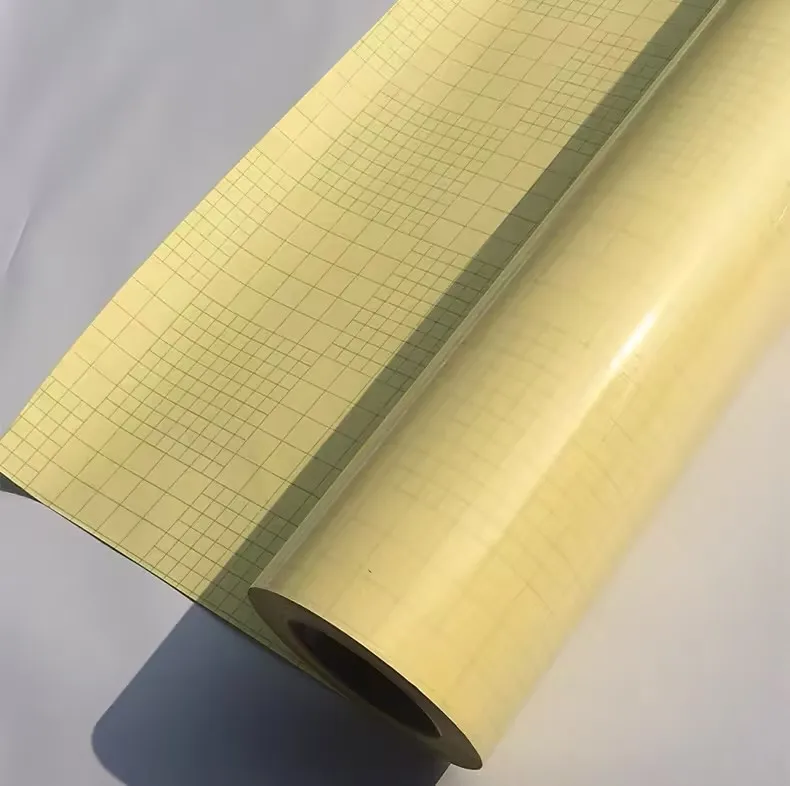
Air entrapment remains one of the top causes of rework—and wasted labor—in large-format signage. Air-egress technology resolves this by integrating a precisely engineered micro-channel network into the adhesive layer. These microscopic pathways—often arranged in a diamond or grid pattern—allow trapped air to escape laterally when pressure is applied with a squeegee, rather than compressing into visible bubbles or tunnels. Unlike traditional “bubble-release” films that rely on perforations (which compromise durability), true air-egress systems preserve adhesive continuity and long-term bond integrity. As demonstrated in field trials by the Sign Industry Research Institute, air-egress vinyl reduces average installation time for building wraps by 30–40%, while cutting rework rates by over 60%. It’s especially critical for complex geometries—such as column wraps or façade transitions—where manual bubble-popping is impractical or ineffective.
Installation is where theoretical performance becomes real-world reliability. Even the highest-grade vinyl fails prematurely if applied incorrectly. Begin with rigorous substrate preparation: clean using 70% isopropyl alcohol (not ammonia-based cleaners, which leave residues) and lint-free microfiber cloths—removing oils, dust, wax, and static-attracted particles that interfere with molecular bonding. Verify surface temperature is between 18°C and 27°C (65°F–80°F); below 15°C, acrylic adhesives lack sufficient flow to form durable bonds, while above 32°C, premature solvent evaporation can cause “dry-edge” lifting.
Apply firm, even pressure using a soft-edged squeegee—starting at the center and working outward in overlapping strokes to expel air and maximize contact. For large panels (>1 m²), consider wet-application techniques: misting the substrate with a water/isopropyl mix (typically 90/10) enables repositioning and minimizes static dust attraction—though excess moisture must be fully evaporated before final squeegeeing. After application, allow a minimum 24-hour cure period before exposing the graphic to rain, direct sunlight, or physical contact. Full adhesive maturation takes up to 72 hours under optimal conditions, during which the acrylic polymer flows into microscopic surface pores—creating a mechanical interlock that dramatically improves resistance to edge lift and environmental stress. Skipping or shortening this step is the most common cause of premature failure—and the easiest to avoid.
Cast vinyl is thin, highly flexible, and offers long-term durability (8–12 years), making it ideal for vehicle wraps and architectural curves. Calendered vinyl is thicker, less flexible, and suited for flat surfaces or short-term outdoor use (3–5 years).
Monomeric PVC uses low-molecular-weight plasticizers, leading to shorter lifespans and limitations to flat or indoor applications. Polymeric PVC uses high-molecular-weight plasticizers, providing better UV resistance, flexibility, and suitability for outdoor or textured surfaces.
The main types are permanent, repositionable, and high-tack adhesives. Permanent adhesives are suitable for long-term graphics, repositionable ones allow for easier removal, and high-tack adhesives work well on rough or low-energy surfaces.
Air-egress technology features micro-channel patterns in the adhesive layer that allow air to escape during application, ensuring a bubble-free installation, especially for large or complex surfaces.
Vinyl lasts longer indoors (3–5 years for calendered, up to 10 years for cast) due to the absence of UV radiation and weather. Outdoors, UV and weather accelerates deterioration, requiring higher-grade materials for extended durability.
Copyright © Zhejiang Yueqianshu Digital Technology Co., Ltd. - Privacy policy
 EN
EN

 Hot News