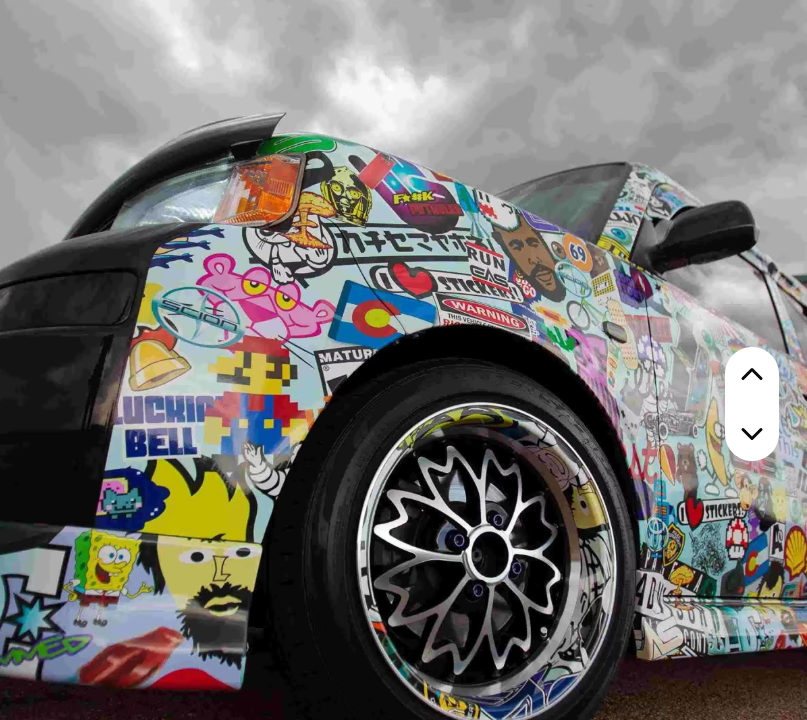
UV radiation breaks chemical bonds in unprotected vinyl, triggering color shift, gloss loss, and embrittlement. For OEM vinyl stickers, UV stabilizers—either absorbed into the polymer matrix or applied as part of a protective overlaminate—act as sacrificial filters that absorb or scatter harmful wavelengths. Accelerated weathering tests (e.g., QUV per ASTM G154) simulate years of sun exposure in weeks, validating real-world performance. Without robust UV protection, visible fading can occur within months in high-exposure regions like the Southwest U.S. or Mediterranean climates. Properly formulated systems—including compatible ink, vinyl, and laminate—maintain color fidelity and structural integrity for 2–5 years outdoors, making UV stability a non-negotiable baseline for any outdoor labeling specification.
Water intrusion is a leading cause of adhesive failure, edge lifting, and delamination—especially during pressure washing, rain exposure, or condensation cycles. Two standardized tests quantify waterproof resilience in OEM applications:
Meeting both thresholds ensures reliable performance across dynamic environmental conditions—and suppliers typically tie outdoor warranty periods to documented compliance with these metrics. Procurement teams should require third-party test reports—not just manufacturer claims—to verify waterproof integrity.
Early failure rarely stems from base vinyl chemistry alone. Instead, it most often traces to inadequate lamination: thin, mismatched, or poorly applied overlaminate creates micro-gaps at edges, permitting UV penetration and moisture ingress beneath the print layer. This accelerates adhesive breakdown, ink cracking, and yellowing—even in premium cast vinyl substrates. In contrast, low-grade calendered vinyl suffers from intrinsic weaknesses: plasticizer migration causes brittleness and shrinkage over time, while insufficient UV inhibitors accelerate pigment fade. True durability emerges from system-level engineering—matching laminate thickness (typically 1.5–3 mil), UV absorption profile, and adhesive compatibility to the base film and ink. A well-integrated stack—not just a “weatherproof” label claim—delivers five-plus years of field performance.
Understanding the key differences between cast and calendered vinyl ensures selecting the ideal base material for your application. Both support OEM sticker production via lamination, but their physical behavior, longevity, and suitability vary significantly under real-world stress.
Cast vinyl is produced by casting liquid PVC resin onto a moving carrier film, yielding ultra-thin (1.5–2.5 mil), dimensionally stable films with exceptional elongation—often exceeding 150% without rupture. This enables tight conformability over compound curves, rivets, and textured surfaces while resisting thermal expansion/contraction stresses. Its molecular structure resists plasticizer migration, maintaining flexibility and adhesion across temperature swings (-40°C to +80°C). When paired with UV-stabilized inks and matching overlaminate, professional-grade cast vinyl achieves 8–10 years of outdoor service life per accelerated weathering data (ASTM G154 Class B cycling).
Calendered vinyl is formed by passing PVC compound through heated rollers, resulting in a thicker (3–5 mil), stiffer film with inherent “memory” that limits stretch and conformability—making it suitable for flat or gently curved surfaces (≤5° radius). It contains fewer UV stabilizers and higher plasticizer content, contributing to shorter outdoor lifespans: typically 2–4 years before visible cracking, shrinkage, or color shift. At 30–50% lower cost than cast alternatives, it delivers economical performance for indoor compliance marking, appliance labels, or temporary outdoor use. To extend exterior viability, calendered vinyl requires moisture-resistant laminates—preferably polymeric films with UV-absorbing additives—to mitigate edge wicking and UV degradation at vulnerable boundaries.
The durability of OEM vinyl stickers depends critically on the ink–substrate bond. Poor compatibility leads to premature cracking, poor wash resistance, or ink delamination—particularly under UV, thermal, or mechanical stress. Three ink technologies dominate industrial printable vinyl: solvent, eco-solvent, and UV-curable.
Solvent inks chemically fuse with the vinyl surface, delivering deep penetration, excellent adhesion, and proven outdoor longevity—typically 3–5 years without significant fade when used with UV-stabilized vinyl and laminate. Eco-solvent inks, with lower VOC content and milder solvents, offer reduced odor and equipment wear while still achieving 2–3 years of outdoor performance—ideal for short-term branding or indoor-compliant OEM markings. UV-curable inks, polymerized instantly under UV light, form a hard, cross-linked surface layer highly resistant to scratching, chemicals, and UV degradation; they routinely exceed 5+ years of outdoor service life when fully optimized with matched media and overlaminate. All three require proper surface preparation (e.g., corona treatment) and ink–vinyl compatibility validation—especially for high-tack or textured substrates. For long-term exterior OEM applications, UV-curable or full solvent inks are preferred; eco-solvent remains a practical choice where cost, safety, or regulatory constraints prioritize operational efficiency over maximum lifespan.
OEM vinyl stickers serve as mission-critical components across manufacturing, logistics, and end-user environments—where failure risks safety, compliance, or brand equity. In industrial settings, they identify hazardous material containers (chemical drums, gas cylinders, IBC totes), enduring oils, solvents, abrasion, and temperature extremes while retaining legibility for years. For compliance marking, they carry legally mandated data—UL 969 (U.S.), CSA C22.2 No. 0.15 (Canada), CLP pictograms—requiring certified material stacks, high-tack adhesives, and solvent-based or UV-cured inks validated for peel and fade resistance on curved metal or composite surfaces. Brand applications leverage the same durability to display logos, safety instructions, and traceability codes on equipment housings, packaging, and shipping cartons—where visual consistency and scratch resistance directly impact perception and usability.
| Application Area | Typical Use Cases | Key Material Requirements |
|---|---|---|
| Industrial | Chemical drums, gas cylinders, warehouse bins | High‑tack adhesive, chemical resistance, temperature tolerance |
| Compliance | UL/CSA marking, CLP pictograms, serialization | Certified material stack, UV‑stable ink, peel‑resistant laminate |
| Brand | OEM product labels, equipment identification, marketing stickers | Color consistency, long‑term adhesion, scratch resistance |
The most widely deployed construction—calendered PVC vinyl, solvent-based ink, and clear polymeric overlaminate—balances cost, manufacturability, and resilience for mid-life-cycle applications. However, optimal performance demands intentional system design: matching ink chemistry to substrate surface energy, verifying laminate UV absorption spectra against expected exposure profiles, and validating final assembly against ASTM D3359 and ISO 4624. By aligning material specifications to actual use conditions—not just datasheet claims—manufacturers reduce field failures, avoid costly recalls, and uphold regulatory and reputational obligations across the product lifecycle.
What makes UV stability important for outdoor vinyl stickers?
UV stability is crucial because it prevents fading, color shifts, and structural damage that can occur due to prolonged sun exposure, maintaining the sticker's appearance and integrity for up to 5 years.
Why are ASTM D3359 and ISO 4624 tests essential for waterproofing?
These tests assess adhesion and peel strength, ensuring that vinyl stickers can withstand water exposure without losing their bond, thus preserving their effectiveness in various environmental conditions.
What leads to early failure in "weatherproof" vinyl?
Early failure is often due to inadequate lamination, which allows UV and moisture penetration, compromising the adhesive and print layer, leading to accelerated degradation.
How do cast and calendered vinyl differ?
Cast vinyl offers superior conformability and long-term durability for complex surfaces, while calendered vinyl is cost-effective and suitable for flat surfaces with a shorter lifespan in outdoor settings.
Which inks are best for durable printable vinyl stickers?
Solvent and UV-curable inks are preferred for long-term outdoor applications due to their strong adhesion, fade resistance, and resilience to various environmental stresses.
Copyright © Zhejiang Yueqianshu Digital Technology Co., Ltd. - Privacy policy
 EN
EN
 Hot News