
One way vision film is a micro-perforated window material engineered to enable directional visibility through controlled light transmission. Its core purpose is delivering daytime privacy: occupants enjoy clear outward views while exterior observers see only a reflective or obscured surface—provided exterior light intensity exceeds interior levels. This creates a practical, energy-efficient one-way mirror effect ideal for commercial spaces requiring discreet observation, branding exposure, or visual separation without sacrificing natural light.
Common real-world applications include:
Manufacturer testing confirms that properly installed films block over 70% of visible light when viewed from the brighter side (2023 industry report). Performance hinges entirely on ambient light balance—a condition that reverses at night or in over-lit interiors. For optimal functionality, installations must be preceded by careful assessment of natural light exposure and interior lighting profiles.
One way vision film operates via precise optical engineering—not magic. A micro-thin aluminum coating applied to a durable polyester base forms a semi-reflective surface. When exterior sunlight significantly exceeds interior illumination, this layer reflects ~70% of incoming light while transmitting ~90% of visible light inward. The result: occupants see clearly outward, while the film appears mirror-like or opaque from outside. This asymmetry arises from photon dynamics—brighter ambient light dominates visual perception, masking the dimmer interior behind the reflective plane. Optical material studies validate this principle, confirming that performance is governed not by film opacity, but by relative luminance.
The “one-way” effect is fundamentally relational: it requires a sustained exterior-to-interior lux ratio of at least 3:1. When artificial indoor lighting intensifies—especially after dusk—the balance flips. Interior surfaces become visible externally, and occupants see mirrored reflections of their own space. Because the film has no active switching mechanism, it cannot guarantee privacy in low-ambient or high-interior-light conditions. Supplemental measures—such as blackout curtains, dimmable LED systems, or frosted interlayers—are essential for maintaining optical separation during evening hours or in brightly lit interiors.
One way vision film delivers privacy only under specific photometric conditions: peak effectiveness occurs during daylight when exterior brightness overwhelms interior illumination. Sunlight striking the film’s reflective or micro-perforated surface enables unobstructed outward visibility for occupants, while simultaneously obscuring interior details from outside observers. This dynamic works reliably in sun-facing retail windows, transit vehicles, and office perimeters—so long as interior lighting remains subdued relative to ambient daylight.
The mechanism rests on luminance hierarchy. Exterior light—particularly direct or diffused sunlight—reflects strongly off the film’s metallic or perforated surface, creating a visual “mask” over the darker interior. Meanwhile, sufficient light passes through the film toward occupants’ eyes, preserving outward clarity. Research published in the International Journal of Building Science found that installations oriented toward consistent daylight achieve ≥85% visual privacy during peak solar hours—provided interior lighting stays below 150 lux.
At night—or in spaces with intense artificial lighting—the effect inverts. Interior light sources overpower the darkened exterior, rendering the film transparent from outside and reflective from within. To preserve privacy after dusk, integrators recommend pairing the film with blackout blinds, using tunable-white LEDs to match exterior ambient levels, or laminating a frosted interlayer that maintains daytime clarity while adding nighttime diffusion. These strategies extend utility without compromising the film’s passive, low-maintenance advantages.
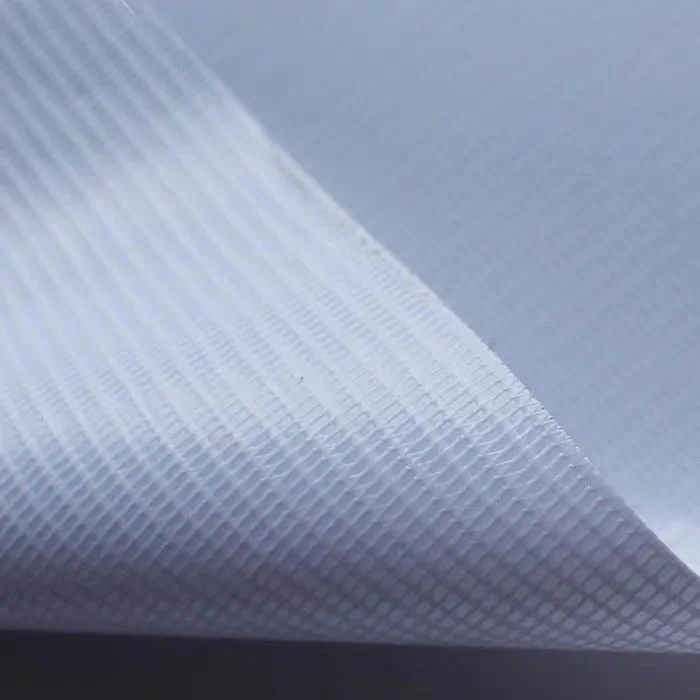
Reliable performance stems from four precisely calibrated layers. A high-clarity, dimensionally stable polyester base provides structural integrity and optical fidelity. Above it, either a laser-micro-perforated pattern—or a sputter-coated reflective layer—creates the light-differential effect: perforations enable line-of-sight transmission, while reflective variants rely on metallic reflectivity. A bonded UV-blocking layer prevents yellowing, fading, and polymer degradation, extending service life to up to 10 years under standard exposure (per ASTM G154 accelerated weathering data). Finally, a pressure-sensitive acrylic adhesive ensures clean, bubble-free application and long-term bond strength—even on large-format glazing. Together, these layers deliver consistent, predictable performance across seasonal light shifts and daily usage cycles.
One way vision film is a micro-perforated or reflective window material that enables privacy by allowing clear outward views while obscuring the inside view from brighter-lit external areas.
No, the film’s privacy effect relies on brighter exterior light compared to interior light. At night, or in well-lit interiors, the film can become transparent.
Applications include retail storefront graphics, public transit advertising, office partitions, and medical facility privacy screens.
Yes, most one way vision films incorporate a UV-blocking layer to protect interiors from harmful UV light and extend the film's lifespan.
To maintain privacy, you can use blackout blinds, dimmable lights, or frosted interlayers alongside the film.
Copyright © Zhejiang Yueqianshu Digital Technology Co., Ltd. - Privacy policy
 EN
EN

 Hot News