
 EN
Eco Solvent Outdoor Vinyl's Role in Green Branding
Picture a storefront in a busy commercial district — wide-format graphics stretched across the facade, colors sharp under direct sun, brand messaging impossible to ignore. Now imagine the company behind that display also publishes an annual sustainability report. The question their procurement team eventually asks is worth sitting with: does the material holding up the brand message actually align with the values it is communicating?
For signage professionals and brand managers who have worked across exhibition, retail, and outdoor advertising projects, that tension is familiar. Over the past several years, eco solvent outdoor vinyl has emerged as one of the most practical answers — not as a theoretical compromise, but as a materials choice that holds up in field conditions while reducing the environmental footprint of print campaigns.
Why Green Branding Requires More Than a Recycled Paper Logo
Brand sustainability claims are held to a higher standard than they were five years ago. A tagline, a leaf icon, or a vague commitment to carbon reduction no longer satisfies procurement officers, end consumers, or ESG reporting frameworks. That pressure extends to the full lifecycle of marketing materials: how they are produced, how long they last, and what happens when a campaign ends.
Physical outdoor advertising is a meaningful part of that lifecycle audit. Banners, vehicle wraps, building graphics, and wayfinding materials consume significant quantities of print media and ink. When those materials are produced using traditional hard-solvent systems with high concentrations of volatile organic compounds, the environmental gap between a brand's stated commitments and its actual supply chain becomes difficult to defend.
Eco solvent outdoor vinyl addresses that gap directly. It enters the conversation not as a niche specialty product but as a mainline replacement that satisfies both performance criteria and environmental ones.
What Sets Eco Solvent Outdoor Vinyl Apart in Sustainability Terms
The environmental case for eco solvent outdoor vinyl rests on a verifiable difference in chemistry. Eco-solvent inks typically contain VOC levels below 100 g/L — significantly lower than traditional solvent inks, which often exceed 400 g/L. This reduction matters in two ways. First, it lowers workplace exposure during production and installation; eco-solvent systems generally require no special ventilation equipment, making them safer for print shops and on-site installation teams. Second, lower VOC output is a meaningful input for brands calculating the environmental profile of their supply chain.
If your sourcing standards require suppliers to demonstrate reduced chemical emissions in their production process, eco-solvent printed vinyl provides a material level where that claim can be substantiated — not just at the ink stage, but across the compatible vinyl substrate.
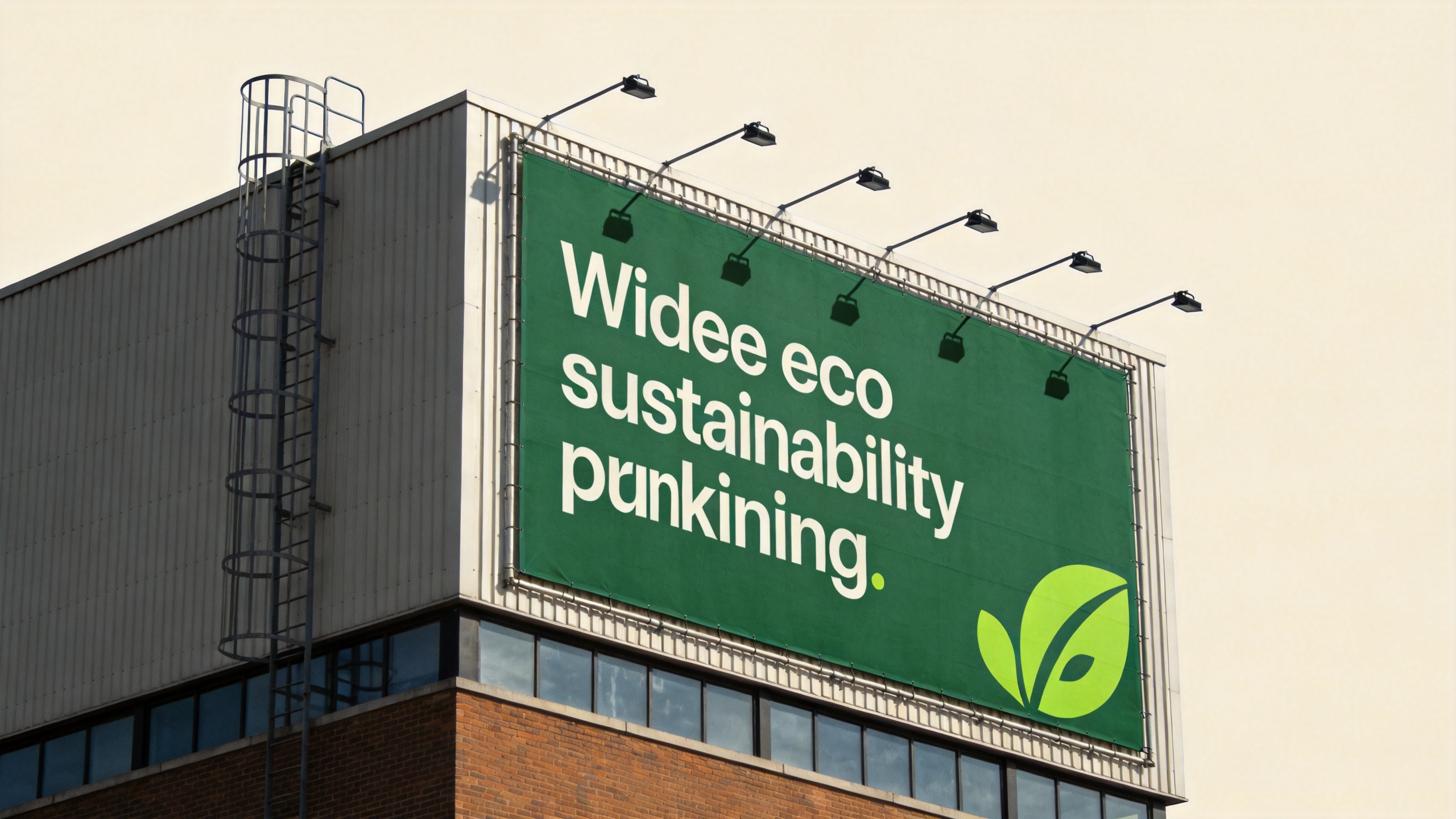
Precision matters here about what "eco" covers in this context. Eco solvent refers primarily to the ink formulation and its reduced VOC emissions profile. The sustainability contribution of eco solvent outdoor vinyl is real but bounded: it is one part of a broader material decision that also includes substrate recyclability, adhesive residue behavior, and end-of-life disposal options. Overstating any single material factor is exactly the kind of imprecision that erodes brand credibility in ESG-aware markets.
Outdoor Performance That Supports Long-Term Campaign Value
Green branding is undermined by materials that fail prematurely. A banner that fades, peels, or delaminates before a campaign's scheduled end date means a replacement print run — additional resource consumption, additional cost, and a visible inconsistency in the brand's environmental narrative.
Eco solvent outdoor vinyl is designed to perform in the same demanding outdoor conditions as its higher-VOC counterparts. High-quality eco-solvent inks contain UV-resistant pigment components that maintain color fidelity over extended outdoor exposure. In real field conditions, this translates to print campaigns that hold their visual appearance through full seasonal cycles without requiring premature replacement.
Geography adds a layer of variability. The same eco solvent outdoor vinyl will perform differently in a dry, high-altitude climate versus a coastal environment with sustained humidity and salt air exposure. This is not unique to eco-solvent formulations — it applies across the category. The practical implication is that specifying the right face stock weight, adhesive system, and laminate combination for the installation environment remains essential. Eco-solvent compatibility does not remove the need for that evaluation; it operates within it.
How Eco Solvent Vinyl Fits Into a Supplier-Level Sustainability Narrative
For brands building supplier scorecards or working toward third-party sustainability certification, the material choices made by their print partners and signage vendors carry measurable weight. This dynamic has accelerated in European and North American markets, where end-client RFPs increasingly include questions about ink chemistry, substrate certifications, and waste management practices.
The shift mirrors a pattern that anyone managing supplier relationships across export markets will recognize: requirements that once appeared as optional value-adds gradually become baseline qualifications. A few years back, requesting eco compliance documentation from a signage supplier felt exceptional. Today, in certain verticals — corporate real estate, retail fashion, event production for ESG-sensitive brands — it is becoming standard due diligence. Suppliers who made that transition early are in a different commercial position than those still treating it as optional.
Eco solvent outdoor vinyl allows print service providers and signage companies to respond to that shift with a concrete technical position rather than a general commitment. When a brand's procurement team asks about the environmental profile of the outdoor media used in their retail rollout, a supplier equipped with eco-solvent-compatible vinyl and the corresponding product data sheets is in a fundamentally different conversation than one that is not.
Evaluating Eco Solvent Outdoor Vinyl: Practical Selection Criteria
For procurement teams and print buyers making this evaluation, a few practical criteria help narrow the field and support downstream sustainability documentation:
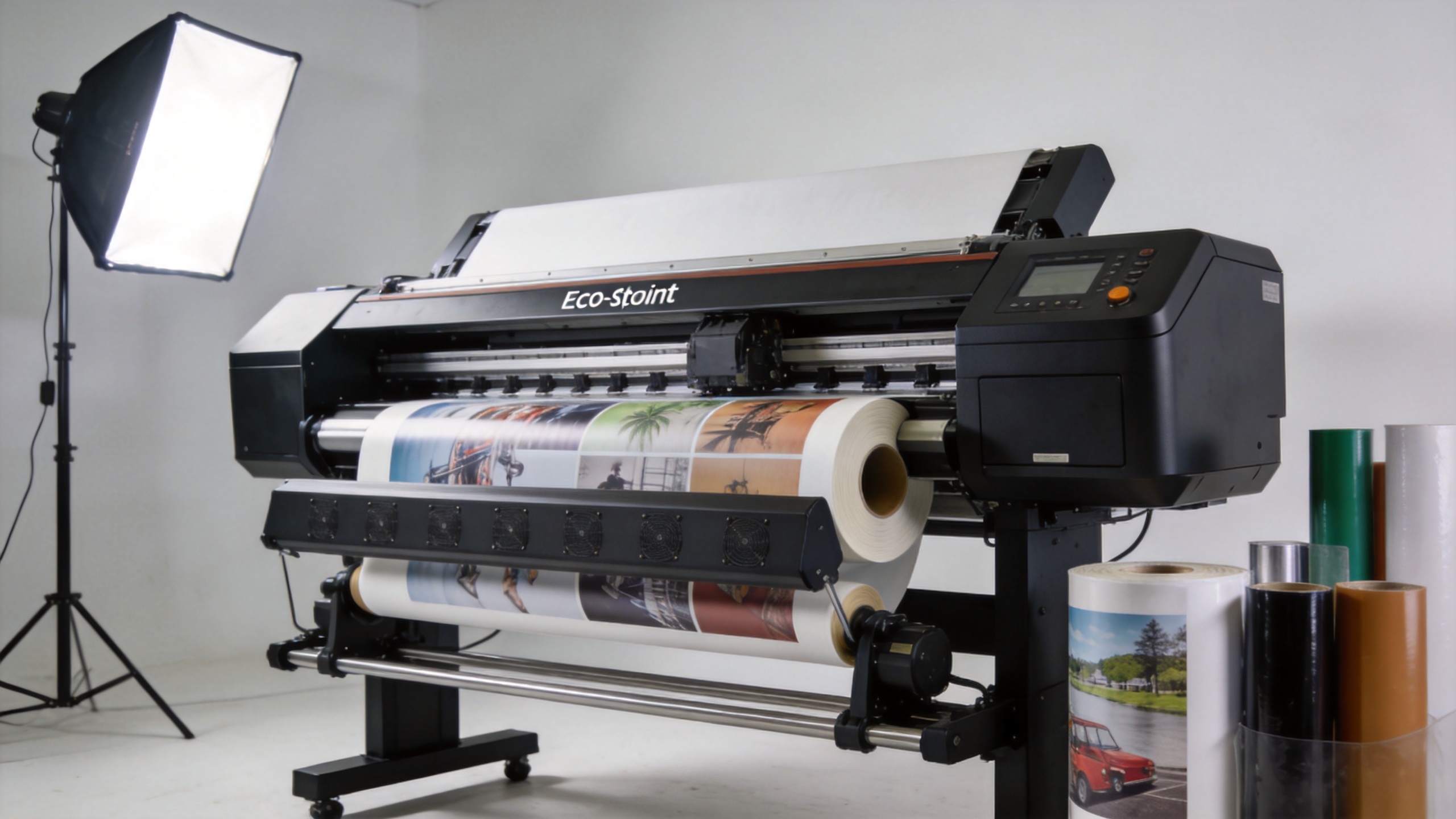
- Ink compatibility verification: Eco solvent outdoor vinyl should be specified alongside the printer system in use. Not all face stocks perform equally across different eco-solvent ink systems. Request ICC profiles or compatibility testing data from suppliers before committing to a specification.
- Outdoor durability rating: Look for face stocks with verified outdoor lifespan ratings tested under UV exposure conditions relevant to the installation geography. The rating should be provided as a specific number of years under defined exposure conditions, not as a qualitative claim.
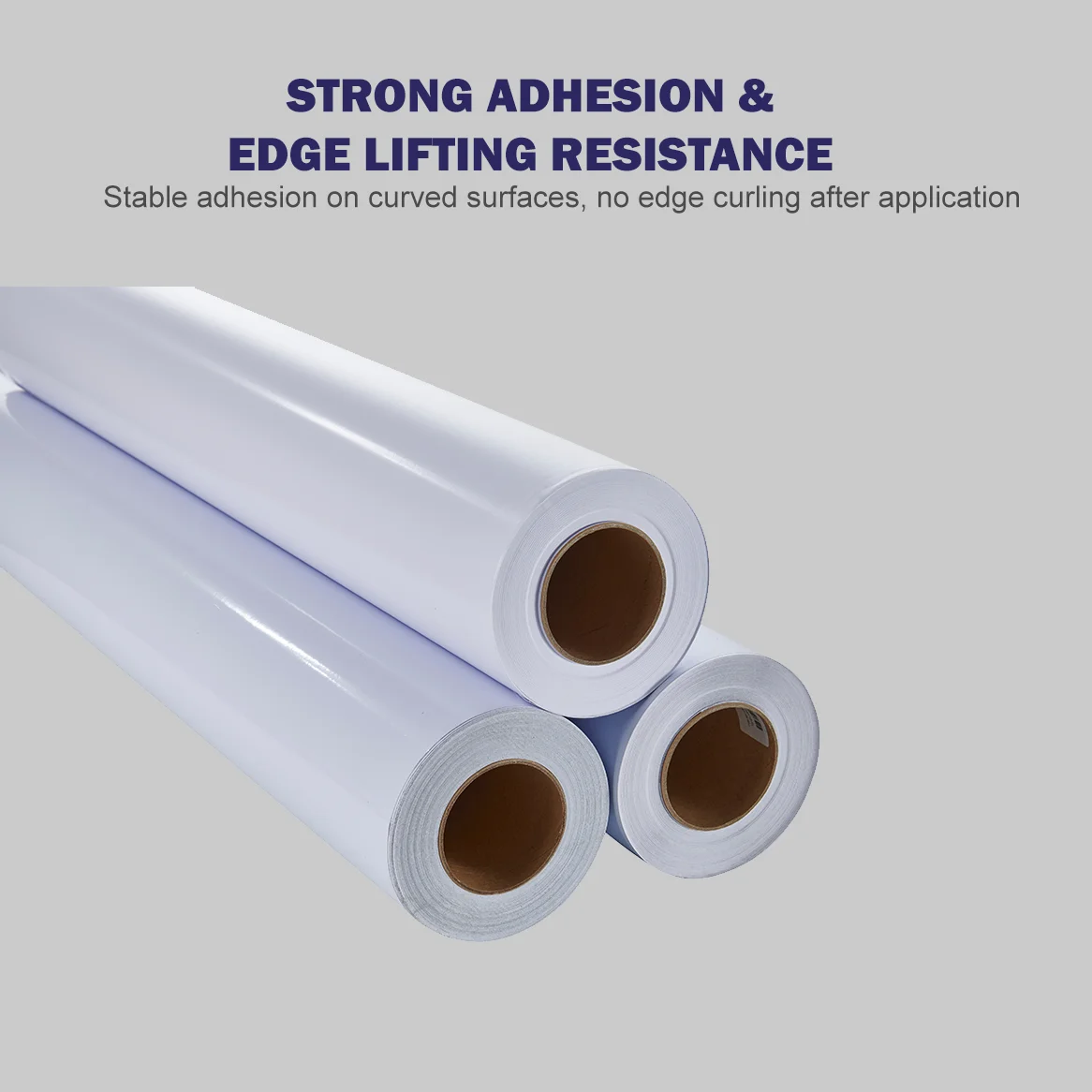
- Substrate and adhesive transparency: The eco claim should extend to the full material construction where possible. Understanding the adhesive system — repositionable, permanent, or removable — and any environmental certifications associated with the base film helps build a more complete supply chain sustainability record.
- Batch-to-batch color consistency: For campaigns with multiple print runs or distributed production across facilities, color stability between batches matters directly. Consistent color across the campaign reduces waste from rejects and maintains brand visual integrity across geographically distributed installations.
The Coherence Advantage in Green Brand Communication
The outdoor advertising industry is undergoing a visible shift toward lower-impact production methods — driven by regulation, client pressure, and internal sustainability commitments from brands themselves. Eco solvent outdoor vinyl sits at the intersection of these forces as a material that delivers on functional requirements without requiring a trade-off against environmental positioning.
That coherence carries real commercial weight. A brand whose outdoor displays are produced on materials with a documented, reduced-emission profile has a more defensible sustainability story than one whose materials choices are simply unexamined. For companies whose brand identity is built in part on environmental responsibility, that alignment between message and medium is not incidental — it is part of the credibility of the claim itself.
Eco solvent outdoor vinyl does not solve every sustainability challenge in large-format printing. But it provides a specific, technically grounded way to reduce the chemical footprint of outdoor brand communication while maintaining the visual performance that outdoor environments demand. For brands serious about green identity, that specificity is worth more than a general aspiration.

 Hot News