 EN
Weather Resistant Outdoor Advertising Vinyl Explained
When sourcing wholesale outdoor advertising vinyl, it is tempting to reduce the decision to weight, price, or a supplier’s “weatherproof” label. That shortcut often fails in the field. Outdoor durability is a system outcome: the vinyl construction, print-and-ink combination, finishing method, mounting design, and local exposure all matter. For an advertising producer purchasing in volume, the useful question is not whether a roll is weather resistant in the abstract, but whether it is appropriate for a specific display period and installation.
What makes outdoor advertising vinyl weather resistant?
Outdoor vinyl normally combines a PVC face film with reinforcement or scrim, then relies on compatible printing and finishing to protect the message. Rain resistance helps prevent water from disrupting the material or printed image. UV resistance helps the graphic retain usable color under sunlight. Tear resistance and dimensional stability help a banner remain presentable when it is tensioned, handled, or exposed to changing temperatures.
These properties should be considered together. A material may tolerate rain well yet be a poor choice for a windy fence installation. A heavier construction may feel substantial but still perform poorly if its edges, hems, grommets, or ink system are not matched to the job. In practice, wholesale outdoor advertising vinyl is selected for an exposure condition, not merely for a catalog specification.
Construction choices: solid scrim vinyl, blockout, and mesh
Scrim-reinforced vinyl for general banners
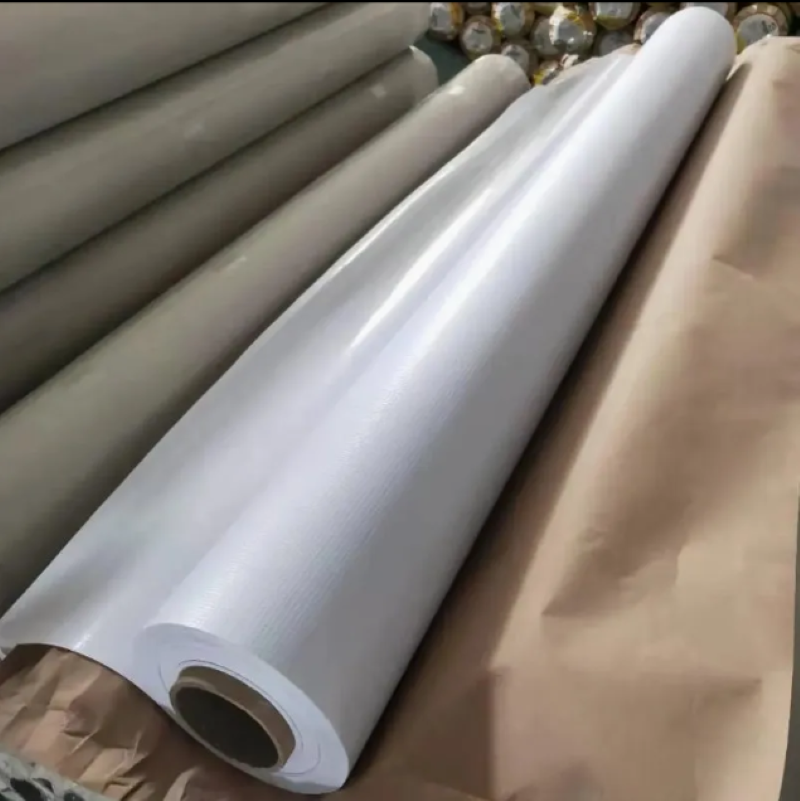
Scrim-reinforced vinyl is a familiar option for short- to medium-term outdoor banners, storefront promotions, and event graphics. The reinforcement supports handling and tension, while the solid face provides a printable surface. Buyers should ask for the recommended print system, finishing approach, and intended exposure rather than assuming one nominal weight suits every project.
Blockout material for double-sided visibility
Blockout constructions are designed to limit show-through when graphics are needed on both sides or when a banner sits in front of a bright background. The key procurement check is practical: confirm that the opacity and print configuration support the planned viewing condition. Blockout can solve a visibility problem, but it does not remove the need to evaluate wind load and mounting points.
Mesh vinyl for wind-exposed locations
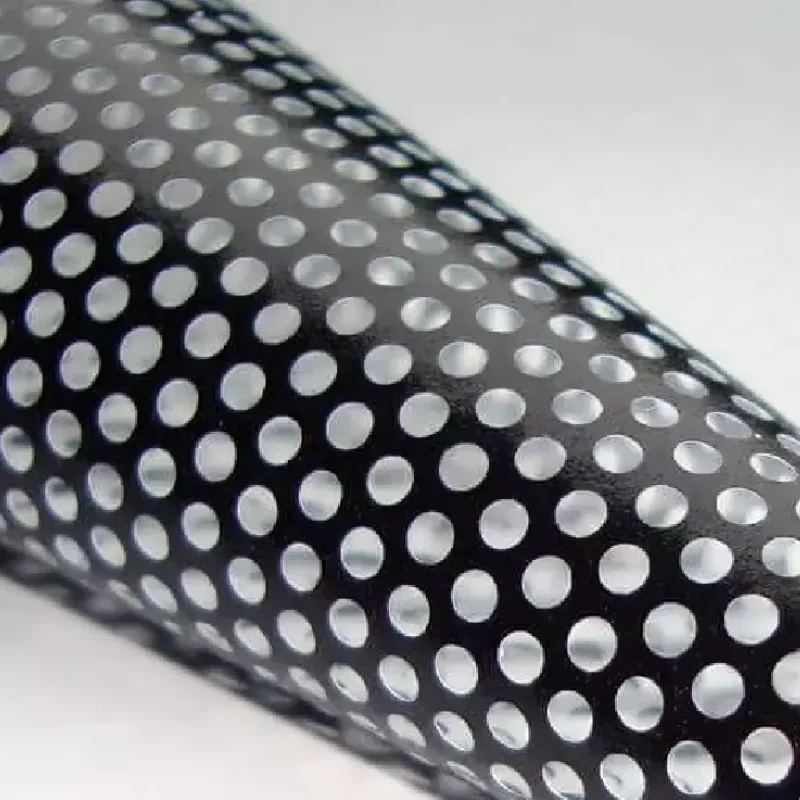
For fences, building wraps, or open sites, mesh can be the more sensible option because its perforations allow some airflow to pass through. That can reduce the force imposed on the graphic and its hardware. It also changes image appearance, so artwork should be reviewed at the expected viewing distance. Choosing mesh simply because a site is outdoors is not enough; choose it when wind exposure and installation geometry justify the trade-off.
Five checks before ordering wholesale outdoor advertising vinyl
- Define the exposure. Record whether the installation faces direct sun, frequent rain, coastal moisture, large temperature swings, or sustained wind. “Outdoor” is too broad to be a complete specification.
- Match the print system. Ask for compatibility guidance for the actual printer, ink set, profile, and drying or curing process. A durable substrate cannot compensate for an unsuitable print-and-ink combination.
- Specify finishing with the same care as material. Hem type, reinforcement, grommet spacing, edge treatment, and tensioning method influence whether the banner survives handling and movement. An otherwise suitable roll can fail at the edges first.
- Request representative samples. Test the sample with the intended printer and finish, then inspect adhesion, color, curl, and handling after realistic exposure. A small trial is usually less costly than correcting a volume order after installation.
- Agree on batch consistency. For repeat campaigns, document the approved material construction, finish, print settings, and acceptance checks. This makes incoming inspection more meaningful and reduces variation between orders.
Why weight alone is not a weather-resistance rating
Weight can help describe handling and construction, but it is not a complete outdoor-performance rating. A thicker or heavier banner is not automatically stronger at its mounting points, more stable after printing, or better suited to wind. Equally, a lower-weight material is not automatically unsuitable. The useful comparison uses the actual job conditions: display size, mounting pattern, graphic coverage, viewing distance, exposure duration, and replacement plan.
This is where experienced buyers move from price comparison to risk comparison. A low unit price has limited value if the material creates reprint work, missed installation dates, or an inconsistent campaign appearance. For wholesale outdoor advertising vinyl, a written purchase specification is usually more reliable than a generic request for “durable banner vinyl.”
Questions to ask a wholesale supplier
- Which construction is recommended for this installation and expected display period?
- What printer and ink combinations have been evaluated for the material?
- What finishing methods and grommet spacing are recommended for the planned size?
- How should rolls be stored and conditioned before printing?
- Can the supplier provide samples from the intended production batch or a documented equivalent?
- What incoming checks should the buyer use to confirm roll-to-roll consistency?
The answers should be specific enough to test. Broad promises such as “all-weather” or “fade-proof” do not replace a job-specific recommendation, especially for installations with unusual wind, heat, or moisture conditions.
A practical purchasing approach
Start with the display environment, then select a construction, printing workflow, finishing plan, and validation sample that all fit that environment. Keep the sample approval and production specification together so the next order can be checked against the same standard. This approach is particularly useful for advertising companies managing multiple sites, because it separates a material’s real fit from marketing language.
TREES supports professional buyers evaluating digital-print materials for their intended application. When discussing wholesale outdoor advertising vinyl, provide the printer model, ink type, banner size, installation method, and expected exposure. Those details make it possible to compare options on practical suitability rather than on a single headline claim.
Wholesale outdoor advertising vinyl: buyer FAQ
How should I specify wholesale outdoor advertising vinyl?
Specify wholesale outdoor advertising vinyl by installation environment, printing system, banner size, finish, and display period. That request gives a supplier a basis for recommending the right wholesale outdoor advertising vinyl construction.
Is wholesale outdoor advertising vinyl waterproof in every installation?
Many wholesale outdoor advertising vinyl constructions are designed for rain exposure, but buyers should validate the complete printed and finished banner. The right wholesale outdoor advertising vinyl choice also depends on seams, hems, and mounting.
When is mesh wholesale outdoor advertising vinyl useful?
Mesh wholesale outdoor advertising vinyl is often considered where airflow is a major installation concern. Before ordering mesh wholesale outdoor advertising vinyl, review image readability from the planned distance.
Should a buyer approve a sample?
Yes. A production-representative sample lets the buyer test wholesale outdoor advertising vinyl with the intended printer, ink, and finishing routine. Sample approval is one of the clearest ways to reduce uncertainty in a wholesale outdoor advertising vinyl purchase.
For repeat work, record the approved wholesale outdoor advertising vinyl construction and incoming inspection criteria. That record helps purchasing teams compare later wholesale outdoor advertising vinyl deliveries consistently.
Conclusion
Weather-resistant outdoor vinyl is not one universal product category. It is a material-and-process choice shaped by sun, rain, wind, printing, finishing, and installation. Buyers who define those conditions, test representative samples, and document the approved specification are better positioned to purchase outdoor advertising vinyl with predictable results.
 Hot News